

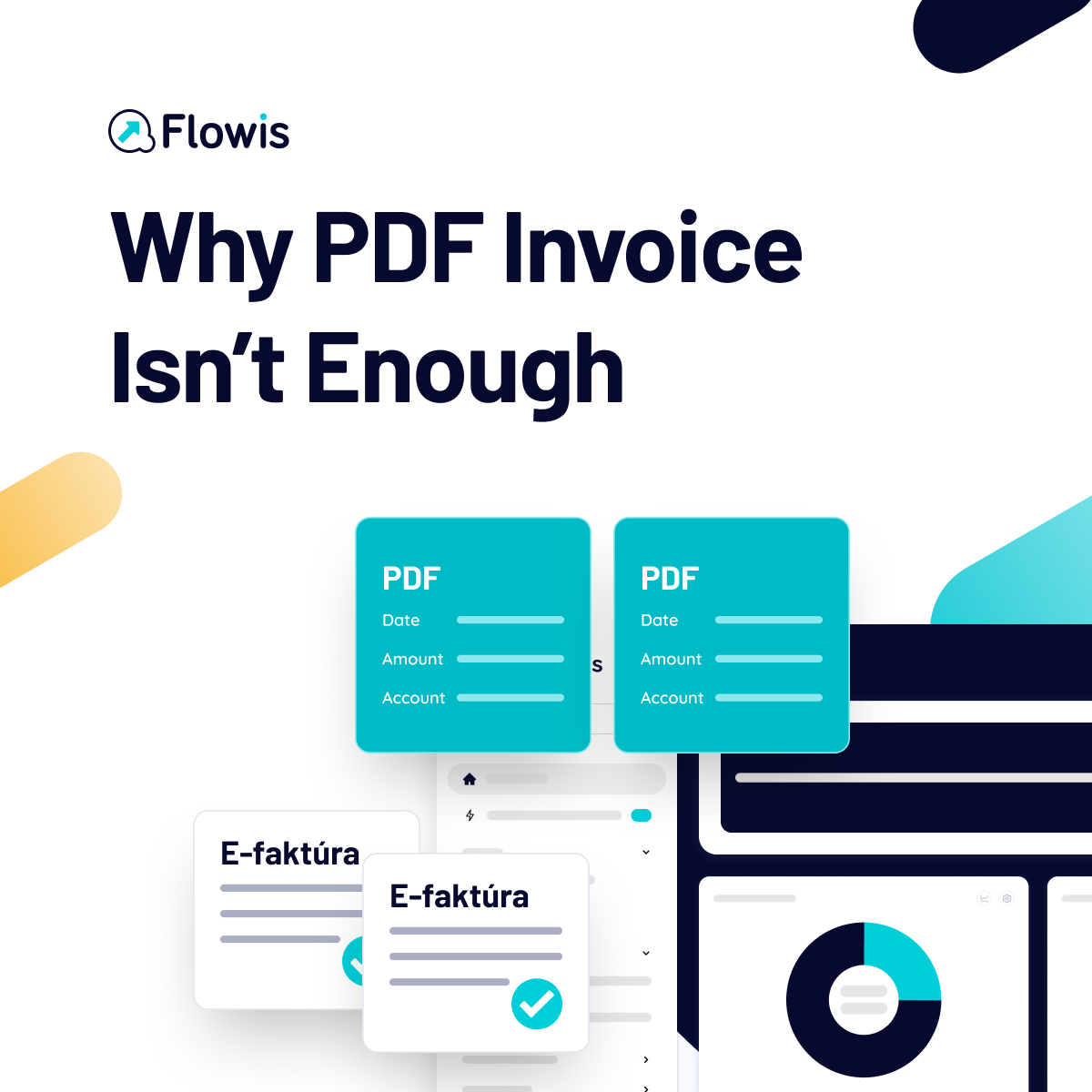
Many companies already send invoices via email in PDF format and consider their process to be electronic. However, for e-invoicing, it is not enough for a document to have a PDF extension. It must contain data in a format that another system can automatically read, verify, and process further.
This is where the difference between a PDF attachment and an actual e-invoice lies. The structured format reduces manual work, minimizes errors, and creates the conditions for automated document processing.
PDFs are designed for people; e-invoices are designed for systems
PDFs are convenient for viewing, reviewing, or archiving documents. However, the data within them is not stored as uniquely identified items that an accounting or ERP system can process further without human intervention.
As a result, an accountant will often open the attachment, check it, enter the data into the system, and then send the invoice for approval. This can work when there are only a few documents. However, as the number of invoices increases, so do errors, delays, and administrative costs.
An e-invoice uses structured data, most commonly in XML format. It precisely specifies the location of the invoice number, due date, supplier and customer information, line items, and VAT. The system can then process the data without the need for manual entry.
That is why it is important to understand the difference between a PDF and an e-invoice. A PDF can serve as a visual preview, but it is not a substitute for a data format designed for electronic exchange.

What Is BIS Billing 3.0 and Why Is It Important?
Peppol BIS Billing 3.0 is a set of rules for structured electronic invoices. It is based on the European standard EN 16931 and specifies what data an invoice must contain and how it must be formatted so that systems from different companies and countries can understand each other.
So this is not just another type of invoice that an accountant would have to create manually. It is a technical standard that specifies how billing information should be prepared for reliable electronic exchange.
- standardizes the invoice format across different systems,
- supports automatic checks of required data,
- makes it easier to process received documents,
- provides a better foundation for integrating invoicing with the ERP system,
- reduces the risk that an invoice will not be accepted or will be processed incorrectly.
By 2030, the e-invoicing format requirements will affect all taxpayers across the EU.
Why Your ERP System Might Not Be Compatible with BIS Billing 3.0
Many ERPs can generate PDF, Excel, or simple XML files. However, this does not automatically mean that they can generate an electronic invoice that strictly complies with the BIS Billing 3.0 rules.
The system may have an incomplete export, use its own field names, or lack the data needed to validate the document. With older ERP solutions, limited update capabilities or the absence of a ready-made connection to e-invoicing services are also common issues.
The inability to create the correct format does not necessarily mean that the entire ERP system needs to be replaced. The company needs to know what data it can extract from the system and how to subsequently convert it into the required format.
The integration of e-invoicing with ERP plays a practical role here. A well-designed integration ensures that data is transferred automatically and that the invoicing process does not rely on manual file exports.
How to Set Up the Correct Format Without Changing Your ERP System
The first step is to map out the billing data in your system. Verify that you have the partner identification information, line items, VAT, payment details, references, and all other information required for an invoice.
The second step is to choose a connection method. If the system supports an integration interface, API integration is the recommended approach. Data from the ERP system is transferred to the e-invoicing solution, where it is converted, verified, and prepared for sending.
If API integration is not yet possible, a company can get started even without direct integration. This approach is suitable, for example, when there are a small number of documents or during the preparatory phase, when a company needs to test a new process.
Access Point Flowis helps bridge the gap between an existing ERP and the requirements of electronic invoicing. Companies can maintain their established processes while preparing data in the correct format.
For incoming invoices, e-invoicing can even be followed by automated invoice processing. If a document arrives in PDF format, OCR and AI technology can help extract the data and move it to the next step in the process.
Peppol Access Point Connects Systems with E-Invoicing
The Peppol Access Point serves as an intermediary layer between a company’s internal systems and electronic invoice delivery. It can convert invoice data into the required format, send it, and provide an overview of the processing status.
It is important for a company that the entire process does not end with the sending of a document. It is equally important to know whether the invoice was delivered, whether it passed the necessary checks, and how it will be processed upon receipt. An overview of the status of invoices gives finance teams greater control over both cash flow and administrative tasks.
When choosing a solution, security should not be overlooked. Security includes data protection, access control, and an audit trail. In internal processing, it is also important that a received e-invoice moves seamlessly through the approval, accounting, or archiving process.
Conclusion: PDF can stay, but it’s not enough on its own
PDF invoices still have their place in a company as a clear and easy-to-read document for people. With e-invoicing, however, you also need structured data that the system can process automatically. That’s exactly why BIS Billing 3.0 is important: it creates a common language for invoicing across systems.
Preparing early allows you to test exports, adjust data, and assign responsibilities without pressure.