

E-invoicing often starts with questions about format and delivery. From an accounting perspective, however, it brings about a more significant change: an invoice can be fed into the process as a structured data file, not just as an attachment from which everything has to be retyped.
This is precisely what creates opportunities for automation. The accounting team can spend more time reviewing exceptions and less time on routine data entry. E-invoicing is therefore not just a technical change, but an opportunity to streamline the entire process, from invoice receipt to accounting.
A received invoice can be entered directly into the process
When processing invoices manually, they are often sent via email as PDF files. Someone has to download them, save them, enter the data into the system, assign a cost center, and find the person who will approve them. Each step creates an opportunity for error or delay.
Ideally , companies have a process automation system that can use OCR and AI technology to extract data from PDFs or other formats and set up automated steps within the system.
A structured e-invoice contains identification data, line items, VAT, amounts, and dates in a format that the system can process automatically. This way, data doesn’t have to pass through the hands of multiple people just to make it into the accounting system.
When received via Peppol Access Point and it is integrated with the accounting system, an e-invoice can be routed according to predefined rules, rather than remaining in a shared email inbox.
For the accounting team, what happens after delivery is also important. The processing of an received e-invoice shows that simply receiving the document is only the first step. What matters most is how quickly and reliably the data reaches the right people and the right system.
Less rewriting means fewer mistakes
Manual data entry remains a common source of incorrect amounts, incorrect cost centers, duplicate postings, or incorrectly selected vendors. Automation does not eliminate the need for verification, but it can shift that verification to areas where it is truly needed.
The system can check for duplicates, required fields, compliance with the order, or accounting rules even before the entry is posted. This way, the error is caught during the process, rather than at the end or when a complaint is filed.
The approval process has a clear point of responsibility
E-invoicing makes it possible to configure approval workflows to precisely match a company’s actual operations. An invoice can be automatically routed to a specific approver based on the company, project, expense type, or financial limit.
If approval is delayed, the system may send a notification. If any information is missing, the document will be returned directly to the person who can complete it. This way, the accounting team doesn’t have to manually track down where an invoice is and who is responsible for the next step.
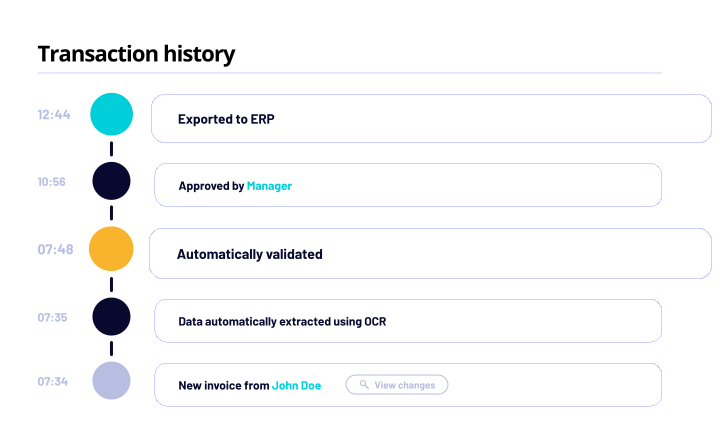
This workflow also creates an audit trail. It shows who received, reviewed, approved, returned, or edited the document. This provides better accountability and makes it easier to trace the document’s history during an audit.
Companies that want to integrate these steps with their own accounting system can take advantage of system integrations. When planning, it’s a good idea to also verify the connection between the process automation system and the accounting system so that data isn’t transferred in only one direction, but so that statuses and audit results are also fed back into the process.
The accounting team is gaining a better overview of incoming invoices
With manual processes, it can be difficult to quickly determine how many invoices are awaiting review, approval, or posting. This complicates payment planning, financial closings, and communication with management.
The automated process can show the status of an invoice at any time. The accounting team knows which documents are complete, which are pending additional information, and which are ready for payment. Greater visibility helps prevent late payments and unexpected cash flow problems.
Security, access rights, and traceability are also important for electronic data exchange. System security is therefore a natural part of the process, especially when the team is working with sensitive financial data.
How to Get Started Without Making a Big Change All at Once
A company doesn’t have to automate everything in a single project. A practical first step is to identify where accountants spend the most time and which checks they repeat for every document.
Focus on receiving invoices, assigning vendors, checking for duplicates, approving them, and transferring them to the accounting system. A phased approach will allow us to verify the benefits using actual documents without unnecessarily disrupting operations.
It is important not to view e-invoicing merely as a new obligation. Preparing for mandatory e-invoicing can serve as an impetus to improve accounting processes, which will yield benefits for the company beyond mere compliance with the law.