

Mandatory e-invoicing will not be merely a technical change in invoicing. For companies, it will also mean a change in how they receive, review, approve, and process invoices in their accounting systems. If the preparation is underestimated, it could result in more manual work, more confusion, and greater pressure on the accounting department.
That is why it is important not to focus only on the format in which invoices will be sent. Companies should look at the entire process — from receiving or issuing an invoice through to its posting. This is often where potential issues arise.
What’s changing as of January 1, 2030
E-invoicing is becoming an increasingly important compliance requirement across the EU. As part of the VAT in the Digital Age initiative, companies will need to prepare for structured electronic invoices that can be processed automatically. In practice, this means that simply sending a PDF invoice by email will not meet the requirements in many cases. A useful first step is therefore to understand why an e-invoice is not the same as a PDF.
It is also important for accounting purposes to note that this is not just about issuing invoices. A company must also be prepared to receive them and process them further without having to re-enter data unnecessarily.
Who is affected by e-invocing?
Many companies are still unsure whether these changes will affect them. That is why it is important to understand who falls under e-invoicing requirements and what the transition will mean in practice. Preparation should not be left until the last minute, as it is not only about meeting legal obligations, but also about making sure internal processes are ready.
This may apply to:
- Companies that issue or receive invoices
- Businesses with in-house accounting teams
- Companies using external accountants
- Sole traders and self-employed professionals
- Accounting firms managing invoices for clients
- Non-profit organisations
- Non-VAT payers (when receiving the invoice)
- Software providers and IT companies supporting invoicing or accounting processes
What a company should be preparing for today
If a company wants to prepare without unnecessary chaos, it should focus on four key areas.
The first is sending and receiving e-invoices. Companies need to understand how digital invoice delivery works, what role the service provider plays, and how invoices will move between business partners.
The second is integration with an accounting or ERP system. If a company wants invoices to be processed automatically, the technical connection between its internal systems and the e-invoicing solution must be in place.
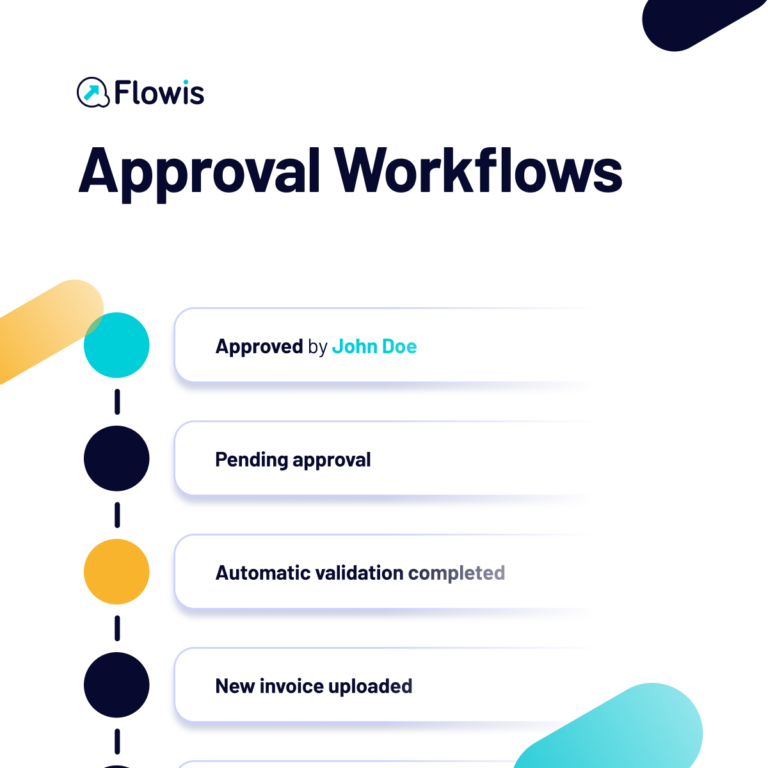
The third is the internal processing of received invoices. Even with e-invoicing, problems can arise if it is not clear where an invoice goes, who checks it, who approves it, and how it is posted. Without a clear workflow, accounting may remain largely manual.
The fourth is choosing a reliable e-invoicing service provider. If the company’s current accounting or ERP system does not yet offer a suitable solution, it should gradually evaluate providers that fit its needs — including support for required formats, Peppol connectivity, integration options, and certification.
With e-invoicing, the need for automation will grow
When preparing for e-invoicing, many companies initially focus on technical integration and the new method of exchanging invoices. This is an important step, but it won’t be enough on its own. With e-Invoicing comes the need to automate document processing for medium and large companies so that the entire process doesn’t remain dependent on manual work and unclear approval procedures.
If an invoice is received electronically but is still reviewed, forwarded, and approved manually, the company will not reap its full benefits. Efficiency is only realized when there is a clear process in place for what happens to the invoice after it is received.
In practice, this means having the following issues resolved in particular:
- who checks the received e-invoices,
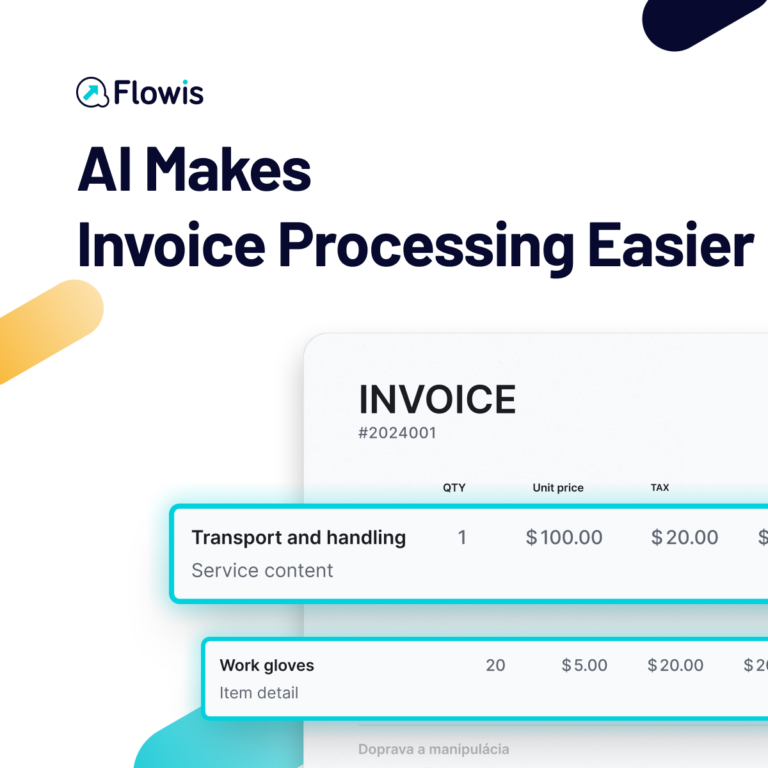
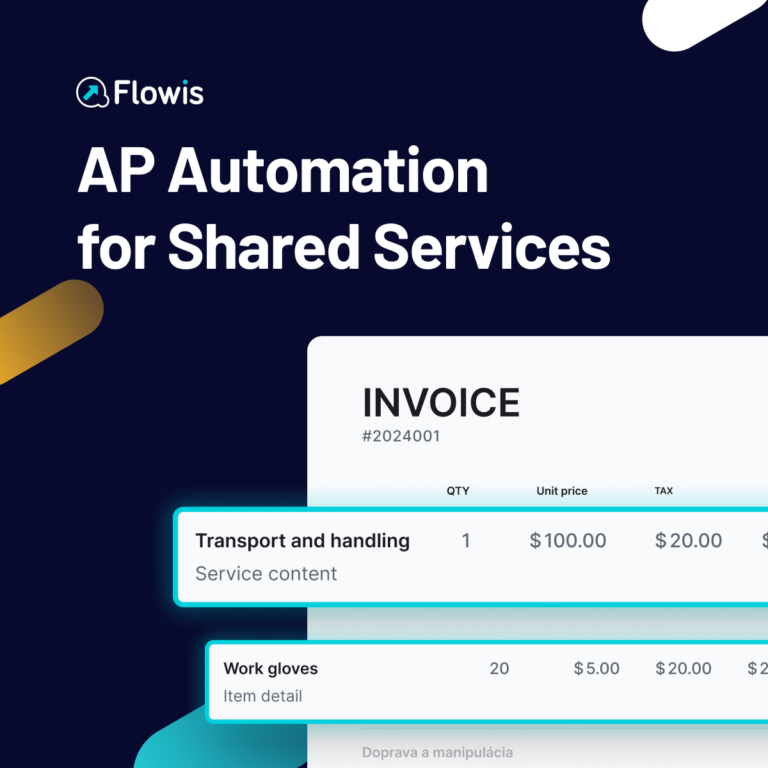
- how data is automatically extracted and verified,
- to whom the documents are sent for approval,
- how missing data or discrepancies are handled,
- and how the invoice is entered into the accounting or ERP system without unnecessary manual data entry.
Companies that already have well-established workflows will have an advantage when transitioning to e-invoicing. They won’t just be dealing with the delivery of the document itself, but will be able to seamlessly move on to the next steps in processing— from verification and approval to posting.
That’s where Flowis comes in
Flowis works as a service provider for e-invoices, but it also handles the entire process that follows their receipt as well as before they are sent. It helps companies automate the verification and extract data from invoices, set up approval processes, route invoices to the right people or departments, and ensure their transparent further processing.
As a result, e-invoicing won’t just be another format that the accounting department has to handle. It will become part of a managed process in which it is clear who is responsible for checking what, who approves it, where the document is located, and what happens to it next.
Preparing for e-invoice 2030 doesn’t have to be chaotic. However, it’s not enough to simply address the technical format or integration. It is equally important to set up invoice receipt, data verification, approval, and further processing so that the entire process runs smoothly.
The sooner a company prepares itself—not only technically but also in terms of its processes—the greater the chance that e-invoicing will provide greater transparency, reduce manual work, and streamline accounting operations.